
Oregon Beezness
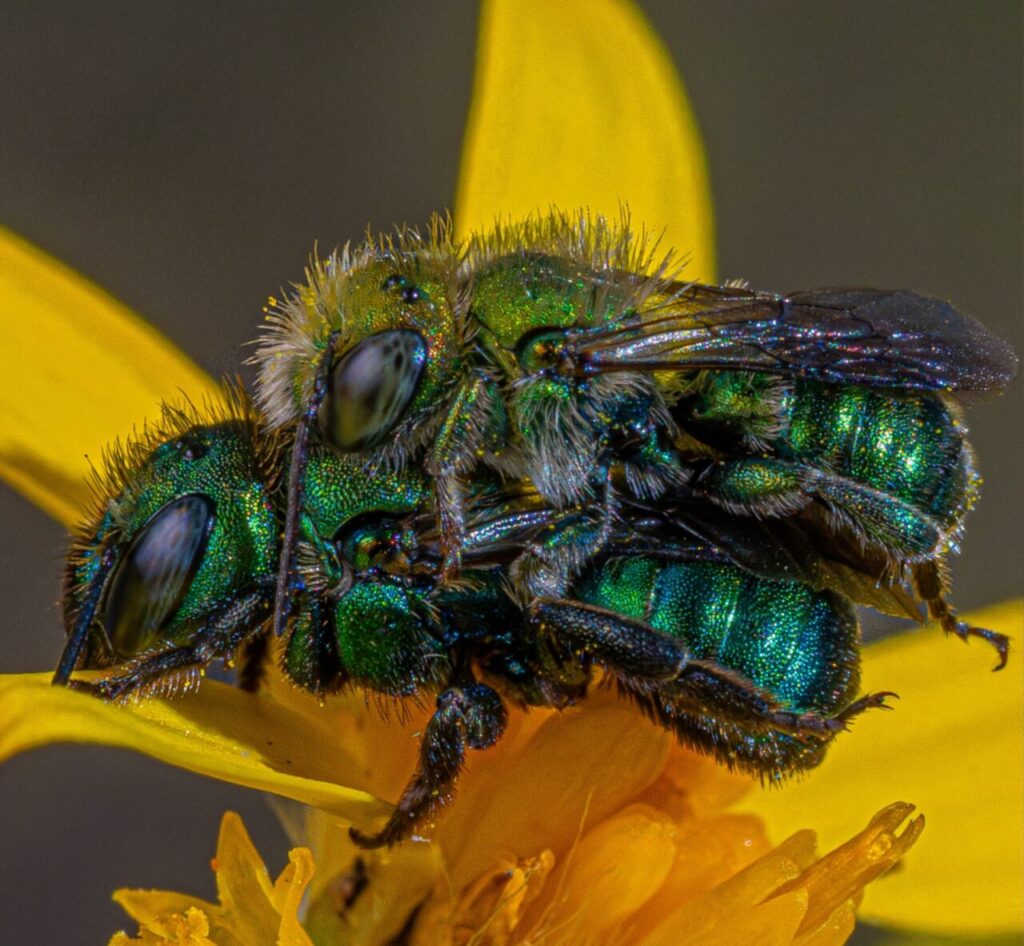
(Left)- Two bees in the mason bee genus Osmia are having some romantic time, which made them very cooperative subjects, allowing me to capture their beauty! (Right)- A digger bee in the genus Anthophora is going to town on a Penstemon flower in the Plantain Family: Plantaginaceae.
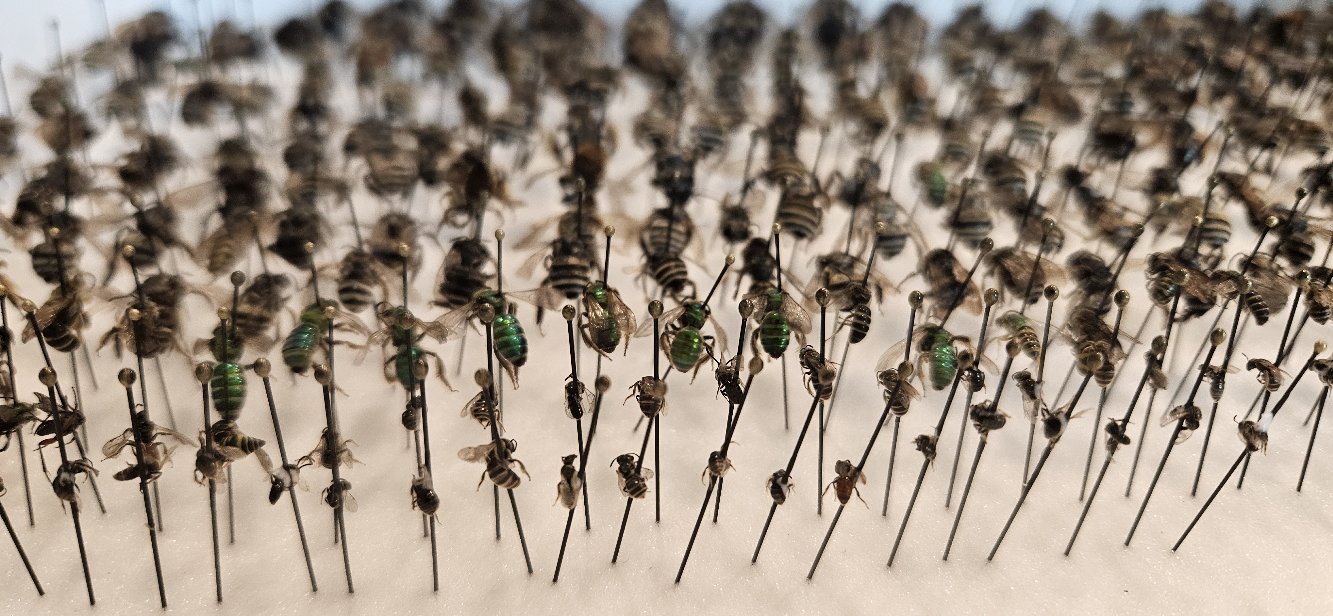
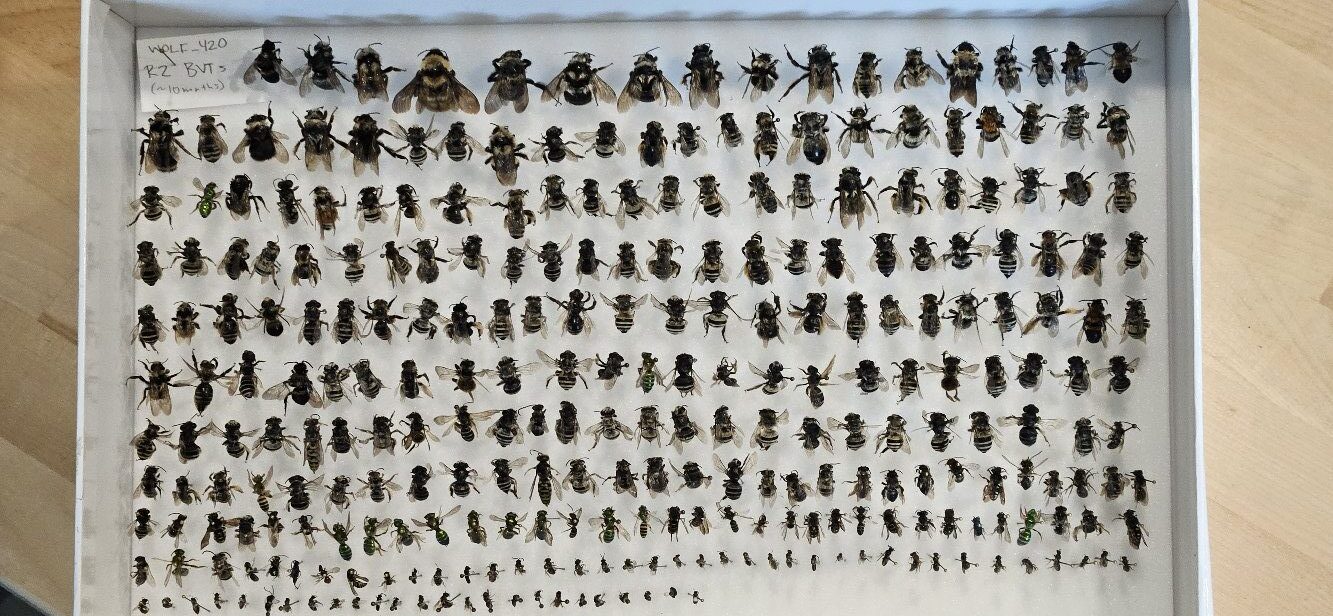
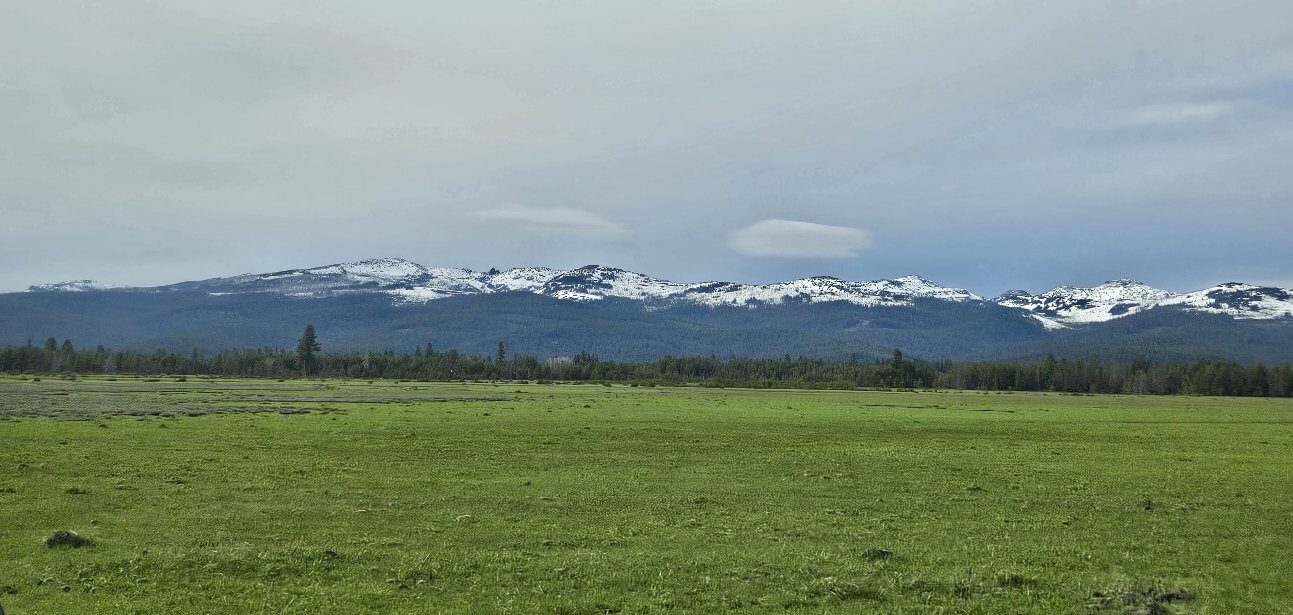
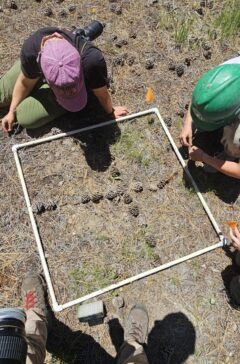
After schlepping across the country from New Jersey, I arrived in the blue mountains of eastern Oregon in May. The snow still capping the peaks of the strawberry mountains overlooking the town of Seneca, which in its valley of grasslands and seasonal marshes surrounded by pine forests on all sides, was my home for the summer. Piling into our white government issue F250 truck, my field team and I left our valley for rickety rocky roads through the rolling hills of arid Ponderosa Pine forests. For 3 months and across 40 different sites I used butterfly nets to catch bees landed on flowers and record which plant species they were feeding on. After collecting thousands of bees using this method along with passive traps, I cleaned and pinned them into arrangements in boxes, like a bug nerd’s dream christmas gift. Why do all this, is it simply a slightly morbid art project? While some of this process can be described as an art, this was all part of a study to get a pulse on possibly one of the most important groups of animals: native bees!


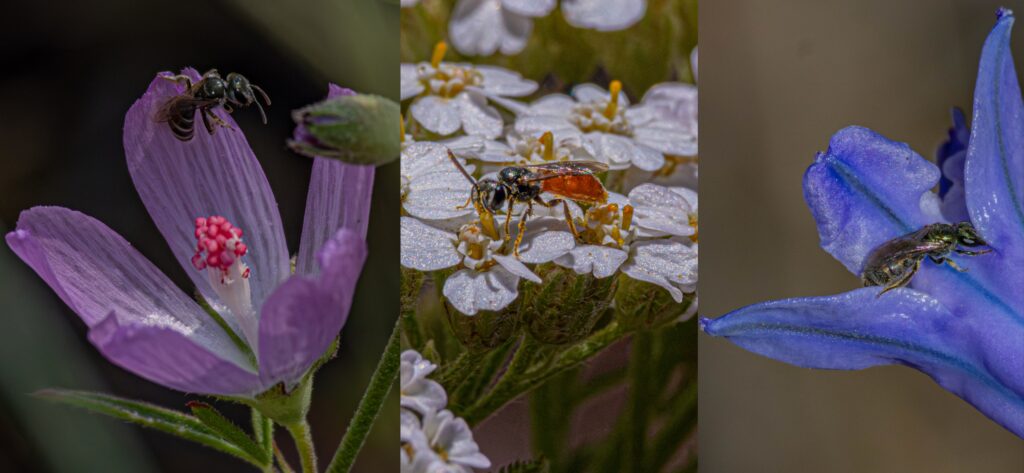
(Left)- A sweat bee is perched on the petal of an Oregon Checker Mallow. (Center)- Another sweat bee, this time with a red booty (abdomen) sips on some Common Yarrow nectar. (Right)- ANOTHER kind of sweat bee is gingerly accessing the rewards tucked away between the petals of this Triteleia.
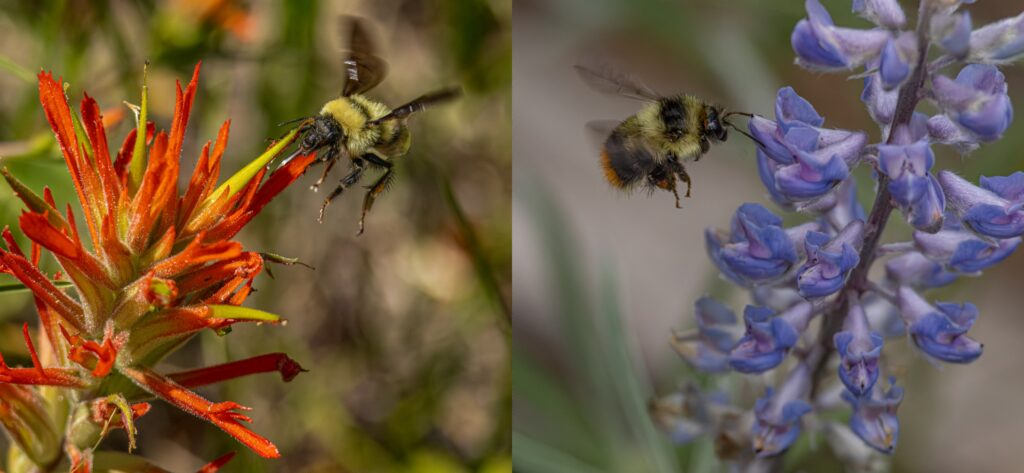
Two bumbles (bumble bees) seen coming in for a nectar pit stop. The Nevada Bumble Bee: Bombus nevadensis (Left), is approaching a paintbrush flower with its “tongue” out ready to start drinking. The Fuzzy-horned Bumble Bee: Bombus mixtus (Right), on the other hand is using her antenna to feel out this lupine flower before making her landing.
In my experience, when the average American thinks of bees, they think of Western honey bees (Apis m. mellifera) which are from Europe, Africa, and Asia. These bees were domesticated in multiple regions going back thousands of years and today are vital for the functioning of our current system of agriculture. However what they are not, is adapted to the plants, habitats, and other animals of the Americas. Native bees on the other hand have spent thousands if not millions of years evolving with the conditions in the ecosystems they call home and thus are better suited to have more complex interconnected networks of relationships to the flora, fauna, and habitat. Globally native bees have been on a drastic decline, due to issues such as habitat loss, and overuse of pesticides.
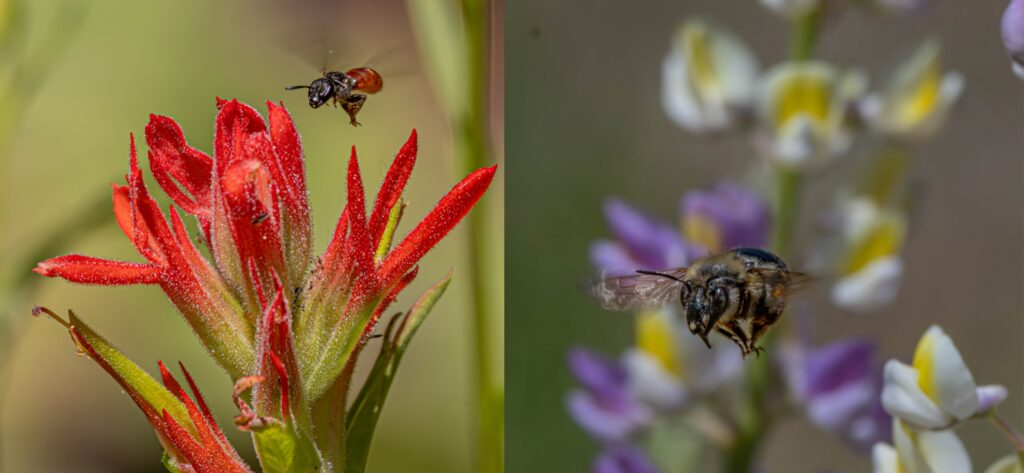
(Left)- I really like how the red of sweat bee matches the red of this paint brush flower. It’s also interesting that at this site I remember this being the only bee feeding from the paint brushes and not finding this bee on any other flowers! (Right)- This digger bee is taking off from some multicolored lupine flowers that filled the hot dry air with a strong floral sweetness.
The project I was a part of was seeking to understand how we can manage arid forests to be the best they can bee for wildflowers and native bees. Humans have always shaped the landscape, though as in many cases with the onset of an industrial revolution, our priorities have misaligned. Instead of managing an ecosystem that is healthy and supports humans and native organisms long-term, the dominant mindset is an extractive one. For the forests of the Pacific NorthWest, this meant industrial logging starting in the mid 20th century. The negative impacts of fire on timber production and its threat to buildings lead to the suppression of the fire that generations of indigenous peoples had used to generate areas of new growth and allow for more mature trees to face less competition. However in Malheur National Forest an opportunity arose when environmental activists and a logging community struggling with new environmental protections that didn’t account for their needs both put aside their differences and hashed out a compromise. The plan: use science to inform best management practices to open up overcrowded areas of forest with calculated cuts and prescribed burns while allowing the loggers to utilize what is removed. While it hasn’t been without problems or disagreement, the collaboration has led to actual progress towards restoring the forest towards its historic conditions and allowing for community interests to be addressed.
By comparing the native bee communities and available flowers between sites that had been restored using cuts, burns, a combination of the 2, and forest that left as-is, we aimed to gauge how effective this kind of land management is for revitalizing pollinator communities and creating bottom up benefits for entire ecosystems.
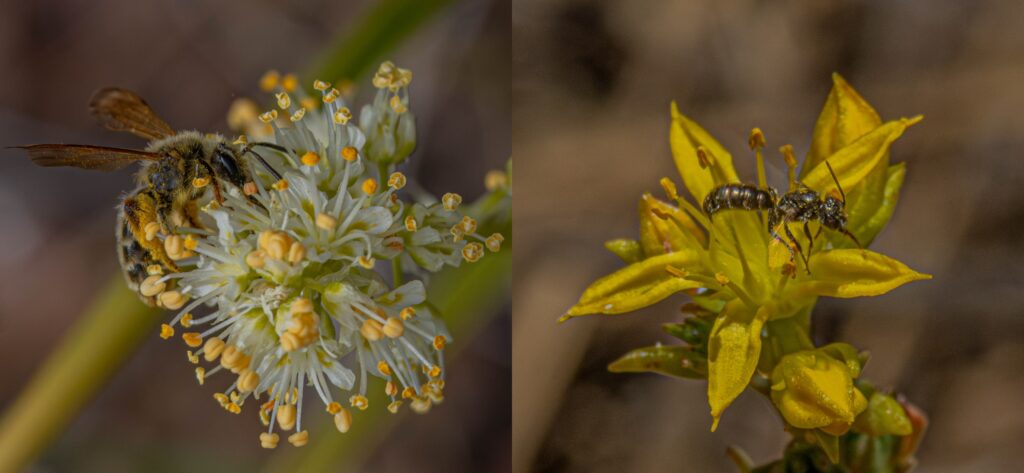
This mining bee (Left) in the genus Andrena is feeding on a death camas flower which is interesting since we didn’t really see this kind of flower being fed on by many other bees at all. (Right)- This sweat bee is sipping nectar from the star shaped flower of a stone-crop flower in the family Crassulaceae.
The results of the study are still being analyzed but the project did document 14 imperiled Western Bumble Bees and create a network of pollinator-plant relationships for an understudied region. From my personal experience, it seemed that the cut and burn sites yielded greater flower abundance and higher bee activity, especially in the early summer. When the results are published I will be sure to share them, but for now these anecdotal observations are consistent with the literature that fire boosts abundance and diversity in the short term, but that having a mosaic of patches with different burn histories creates the most diversity at a larger landscape scale.
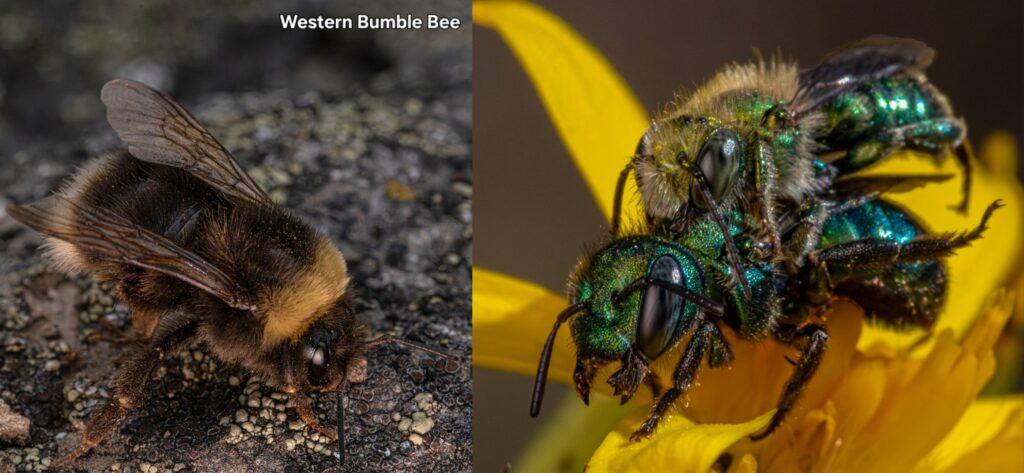
(Left)- THIS IS A WESTERN BUMBLE BEE!!!!! This species was once very common across its range but now has become quite uncommon to rare in areas. I caught this beeautiful individual with her characteristic white booty during one of my sampling sessions, which meant she was included in the data (but released unharmed along with any bumble bee queens captured)! (Right)- This is another angle of the Osmia bees from the first picture of this post. This angle really shows off the large jaws of the female, which she may use to collect mud to seal off her nest constructed inside holes in wood.
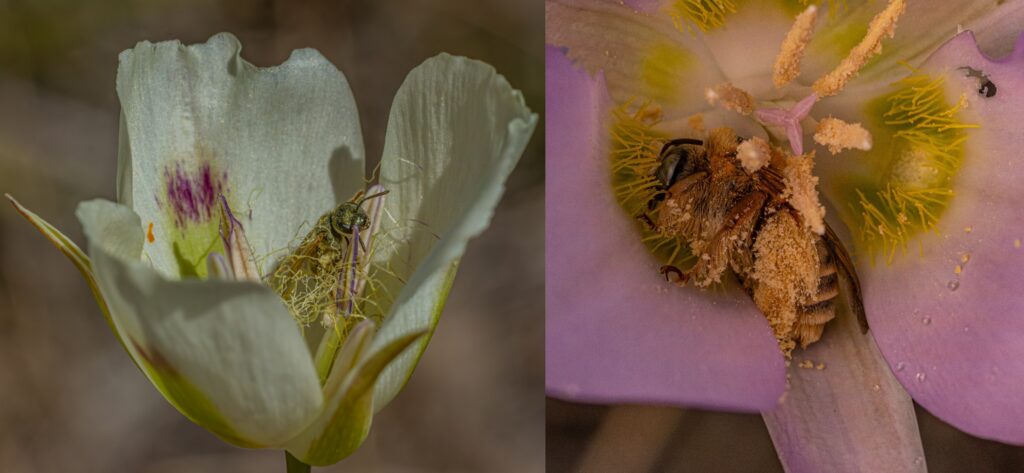
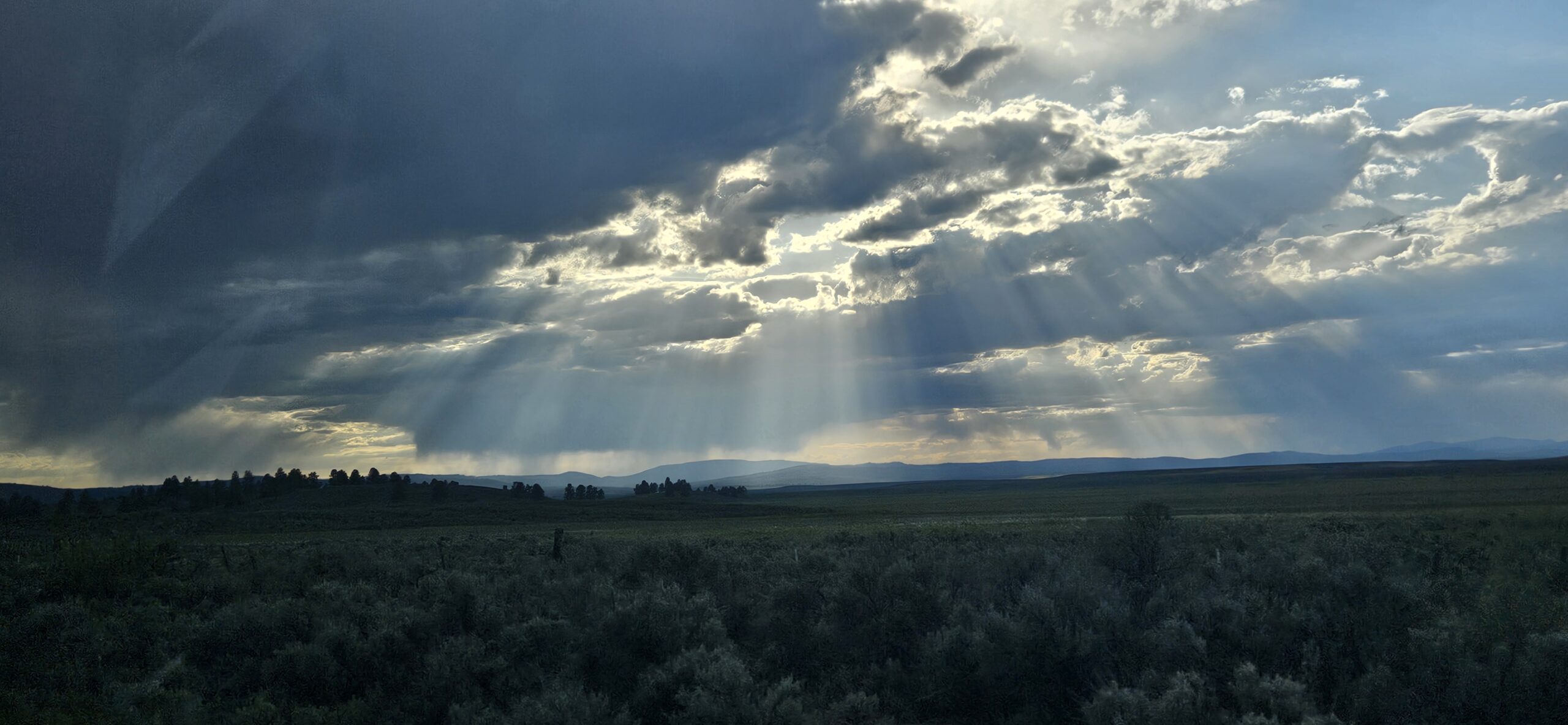
These 2 bees (Left- sweat bee, Right- Chimney bee in the genus Diadasia) are inside 2 different species of mariposa lilly, with the bee on the right using it as shelter from the rain, wind, and 40ish degree temperatures that we were currently experiencing at the top of a hill in the Owyhee Canyonlands.
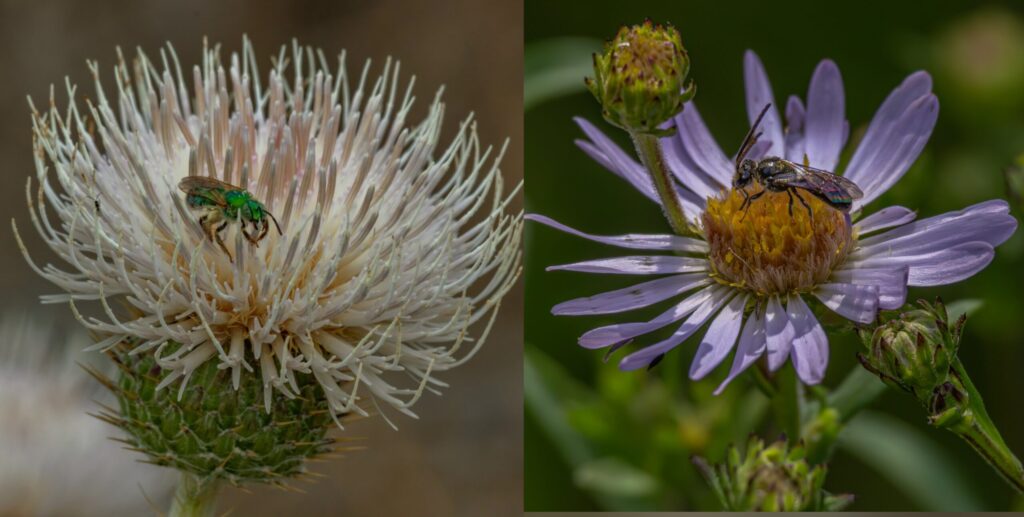
Two different sweat bees feeding from two different asters but looking strikingly different. I thing this along with the other photos does a good job of summarizing the diversity of the floral and pollinator communities I had the pleasure of studying during my time working in Eastern Oregon.